
Choosing sports equipment is not just about comparing prices or following a trend. The choice of gear directly influences the quality of training, injury prevention, and medium-term progress. It is essential to know which criteria to assess before making a purchase.
Data portability and interoperability of connected devices
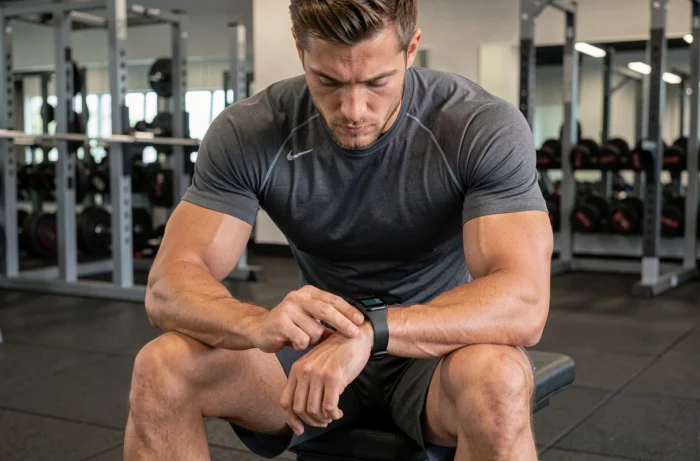
Watches, bracelets, and connected fitness devices are increasingly prominent in sports practice. A criterion often overlooked at the time of purchase concerns the portability and export of training data. A device whose data remains locked in a proprietary application limits the actual usable life of the equipment, even if its technical performance is satisfactory in the short term.
The European Data Act aims to facilitate the switching of data processing services and interoperability between platforms. Future connected devices will need to make their data accessible by default. Before investing, check the export policy, compatibility with third-party services (Strava, TrainingPeaks, Apple Health), and data retention conditions.
A tracker that syncs your sessions only with its own application locks you into an ecosystem. If the publisher stops support or changes its terms, you lose your progress history. Favor devices that allow export in standard formats (FIT, GPX, CSV).
To explore the various categories of available equipment, sports equipment on Format Sport covers everything from weightlifting accessories to connected devices.
Available space and safety: how the floor and room affect things
The performance of equipment also depends on the environment in which it is installed. The requirements applicable to sports facilities cover circulation areas, safety distances, flooring, and accessibility. These principles apply at home as well as in a gym.
A stationary bike or weight rack placed in a space that is too narrow increases the risk of collision and limits the range of motion. The type of flooring plays a direct role in the stability of the device and in vibration absorption.
| Installation criterion | Cardio device (bike, elliptical) | Weight training device (rack, free weights) |
|---|---|---|
| Minimal space around the device | Sufficient lateral and rear clearance for safe dismounting | Recoil area for bars and wide movements |
| Recommended floor type | Flat surface, optional shock-absorbing tiles | Thick rubber tiles to absorb dropped loads |
| Ventilation | Regular airflow, prolonged cardio effort | Less critical, but necessary for comfort |
| Floor anchoring | Rarely necessary | Recommended for racks and cages |
Assess the space and flooring before purchasing, not after. A poorly installed high-performance device generates vibrations, noise, and a risk of injury that negate its technical advantages.
Maintenance and actual lifespan of sports equipment
Maintenance is a factor for long-term performance and safety. The cables of a multi-station machine wear out, the bearings of an elliptical bike deteriorate, and resistance bands lose their elasticity. Poorly maintained equipment loses precision and safety long before it visually appears to be out of order.
Before purchasing, identify the wear parts and their availability. A device with replaceable components without costly technical intervention lasts significantly longer than a sealed model.
- Check the availability of spare parts (cables, bearings, cushions, bands) from the manufacturer or third-party retailers.
- Consult the recommended maintenance frequency in the manual: lubrication of rails, tension of cables, inspection of welds.
- Prefer steel structures with corrosion-resistant coating if the device is stored in a garage or damp space.
- Keep purchase receipts and warranty conditions, which vary significantly by range.
A higher initial investment in a repairable device pays off compared to a complete replacement every two or three years.
Resistance and progression: adapting equipment to your level
The resistance level of a device determines the margin for progression. A beginner who buys a set of low-resistance bands will quickly hit a plateau. Conversely, an intermediate user investing in a maximum load that is too low on a guided machine will limit their strength gains.
The resistance range should cover your current level and your medium-term goal. For home strength training, modular systems (Olympic discs, progressive tension bands, adjustable dumbbells) offer better adaptability than fixed weights.
- For cardio, devices with numerous resistance levels (bike, elliptical, rower) allow for endurance and interval training on the same equipment.
- For muscle strengthening, variable resistance bands effectively complement a free weight bar by adding progressive tension at the end of the movement.
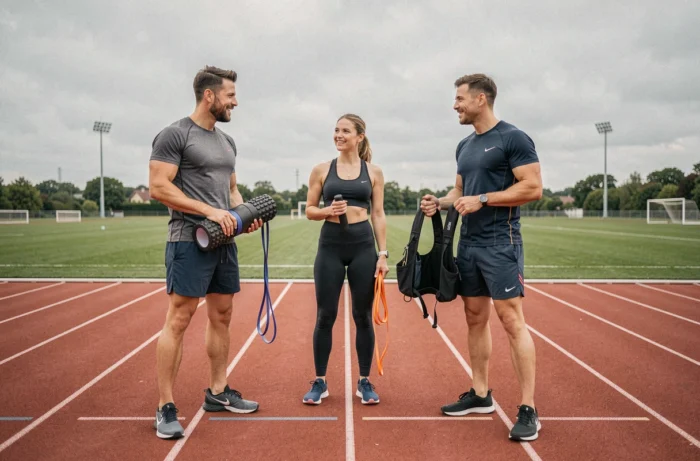
- For recovery, massage rollers and mobility bands do not have a resistance level, but their density and shape directly influence the effectiveness of myofascial work.
A versatile device with a wide resistance range meets more needs than a specialized model whose full capabilities you will exploit in a few months.
The choice of sports equipment is based on measurable criteria: data interoperability, installation space, ease of maintenance, and resistance range. These four parameters determine the useful life of the equipment and its ability to support consistent progress. A purchase guided by this data better protects your investment than a choice based solely on the technical sheet.