A fashion trend refers to a clothing movement adopted at a given moment by a critical mass of consumers, creators, and media. This season, the autumn-winter trends are distinguished by a new regulatory context in France, which changes the way brands communicate and how buyers build their wardrobes.
Advertising restrictions and ultra-fast fashion: what changes for your wardrobe
The law adopted in France in 2026 prohibits advertising for ultra-fast fashion brands and their promotion by influencers starting January 1, 2027. This measure directly affects the visibility of trends that renew very quickly, those that generate micro-cycles of a few weeks.
The consequence for personal style is concrete: sustainable trends take precedence over disposable micro-trends. The pieces purchased this season will need to last several months in a wardrobe, which guides choices towards more enduring cuts and materials. Second-hand products remain excluded from this regulatory framework, making them an alternative channel to acquire distinctive pieces without fueling overproduction.
Specialized resources like lefumoirdelamode.com allow you to follow these developments and identify pieces that align with a strong style approach rather than impulsive consumption.
Leopard print and bright red: two strong choices for autumn
Leopard print has been making a comeback for several seasons, but its use has evolved. It is no longer limited to discreet accessories. It can be found on long coats, midi skirts, and wide trousers, treated as a structuring motif of the look rather than just a decorative touch.
Red asserts itself as the directive color of the season. Not the classic burgundy red of autumn, but a pure, saturated red, worn in a total look or as a single piece against a neutral base. The combination of red and leopard, once deemed excessive, appears on runways and in selections from mainstream brands.
To integrate these strong choices without looking costumed:
- A wide leopard print trouser paired with a solid black or cream sweater is enough to anchor the trend without overwhelming the silhouette
- A red cape worn over raw denim and flat ankle boots gives an immediate look with minimal pieces
- A bright red accessory (structured bag, wide belt) serves as a focal point on a dark outfit
Cape and ample volumes: the autumn-winter silhouette that structures the look
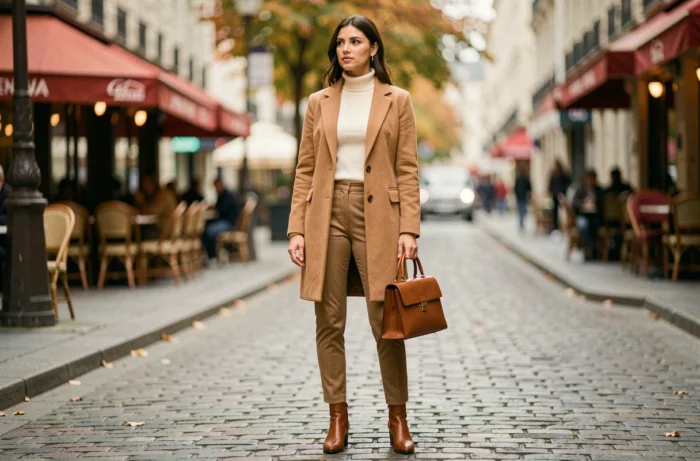
The cape is one of the pieces that distinguishes this season from previous ones. It replaces the classic coat in some wardrobe proposals, with a practical advantage: the cape creates volume without constraining the shoulders or bust. It suits very different body types.
Ample volumes are also found in trousers. The wide, fluid trouser, often high-waisted, extends the vertical line and balances the enveloping pieces on top. This play of proportions requires attention: the bulkier the top, the more the bottom benefits from being structured with a belt or defined waist.
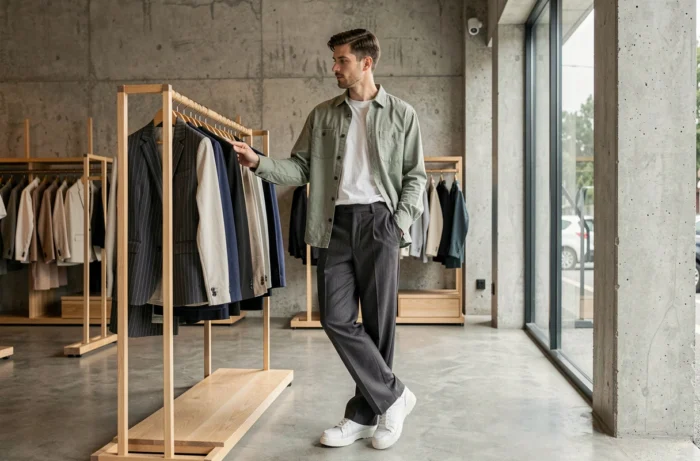
The oversized blazer remains a staple of the autumn wardrobe. Worn open over a fine turtleneck, it adds structure without rigidity. Its versatility makes it a piece that transitions from office to weekend.
Environmental labeling and PFAS: two issues changing textile choice criteria
Environmental labeling is starting to enter shopping habits in France. This system aims to make the ecological impact of a garment visible at the time of purchase. For the consumer, this means that an additional criterion appears alongside price and cut: the displayed environmental impact becomes a selection filter.
PFAS (per- and polyfluoroalkyl substances) are becoming a concrete issue for clothing and shoes sold in France. These chemical compounds are found in items claiming water-repellent or technical properties. Their presence in textiles is receiving increasing regulatory attention.
What this changes for choosing a seasonal piece:
- Cheap “waterproof” jackets and coats often use PFAS-based treatments, while alternatives exist with fluorine-free coatings
- A technical garment that displays its composition and surface treatment inspires more confidence than an item vague about its properties
- Favoring natural materials (wool, heavy linen) for non-technical pieces reduces exposure to these substances
Building a seasonal outfit with three guiding pieces
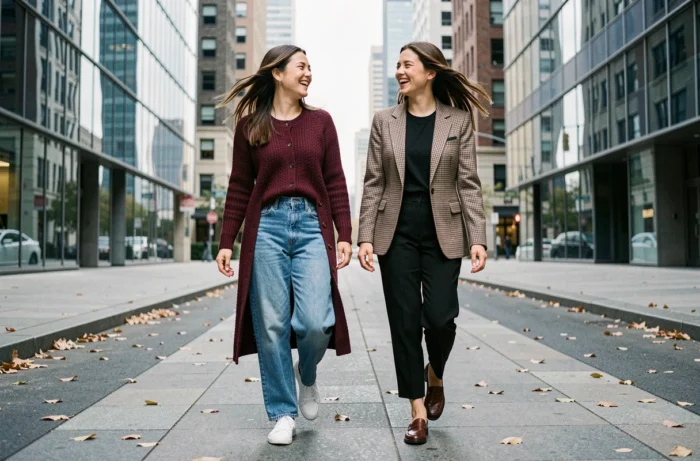
Affirming your style this season does not come from accumulation. Three well-chosen pieces are enough to give a clear direction to an outfit. The logic is that of a triangle: one volume piece (cape, oversized blazer), one color or print piece (red, leopard), and one structured piece (high-waisted trousers, raw denim).
The rest of the look serves as a binder. A black turtleneck, round-toed ankle boots, a simple bag. These basics do not draw attention but allow the guiding pieces to function without visual competition.
This approach has a concrete advantage in terms of sustainability: the guiding pieces change with the seasons, while the basics remain. The cost per wear decreases, and the wardrobe gains coherence rather than volume.
The autumn-winter 2026 season combines strong fashion trends (cape, red, leopard, ample volumes) with a French regulatory framework that encourages more thoughtful purchases. Personal style is now built as much by what we choose as by what we decide not to buy.