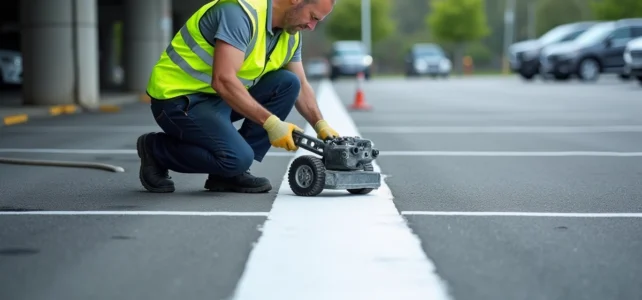
Parking lot marking paint is not just about choosing a color and format. The substrate (smooth concrete, asphalt, old asphalt), traffic level, and UV exposure dictate the binder chemistry, surface preparation, and application method. Here, we detail the technical considerations that determine the durability of the marking over several years.
Adhesion on exterior concrete: the factor that the product sheet does not quantify
On a concrete slab parking lot, the main cause of failure is not the abrasion resistance of the paint film. It is the detachment due to loss of mechanical grip between the binder and the substrate.
Job site feedback confirms a clear disfavor for public exterior floor paints on private parking lots, with frequent peeling under tires and marked sensitivity to oil stains. The problem rarely comes from the product itself: an unprepared concrete surface condemns even a high-performance resin.
The preparation sequence we recommend before any application on exterior concrete includes three inseparable steps:
- Intensive degreasing cleaning to eliminate oil stains, tire marks, and surface laitance that form a barrier between the binder and the pores of the concrete.
- Mechanical opening of the pores through sanding or shot blasting, to create sufficient roughness for the primer to anchor.
- Application of a suitable bonding primer according to the chemistry of the finishing paint (epoxy primer under epoxy system, polyurethane primer under polyurethane).
Skipping any of these steps significantly divides the lifespan of the marking, even with a technically suitable product. Choosing a parking lot marking paint without factoring in the cost of substrate preparation skews the entire budget.
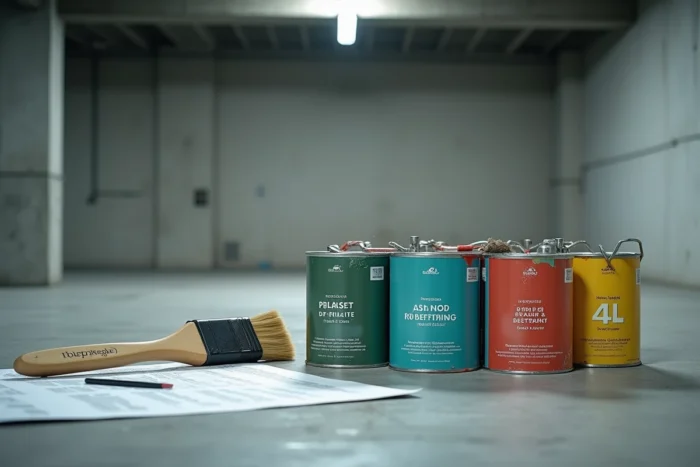
Epoxy, polyurethane, or methacrylate coating: which binder for which parking lot
The choice of binder depends on the traffic/exposure combination, not on an absolute hierarchy between technologies. Each chemistry presents a distinct compromise profile.
Epoxy paint for covered parking with regular traffic
The two-component epoxy system (resin + hardener) offers high film hardness and excellent resistance to common chemicals found in a parking lot: motor oil, brake fluid, antifreeze. However, epoxy yellows under prolonged UV exposure, making it primarily suitable for covered or underground parking lots.
On uneven concrete, epoxy has an additional advantage: its viscosity allows it to fill micro-defects in flatness and produce a homogeneous film without prior leveling layer.
Polyurethane for exposed outdoor parking
Polyurethane resists UV and retains its color outdoors, where epoxy visually degrades. It also offers superior film flexibility, which limits cracking on substrates subjected to significant thermal variations.
Since 2024, several French manufacturers have offered polyurethane formulations specifically calibrated for outdoor concrete parking spaces, combining resistance to vehicle traffic and weather durability.
Cold methacrylate coating for high traffic areas
Cold methacrylate coatings represent an upgrade for high-turnover parking lots (shopping centers, public parking). Formulated without solvents, they polymerize quickly and produce a film significantly thicker than conventional paint.
The application temperature range is between 5 and 30 °C, excluding rain and damp surfaces. The installed cost is significantly higher than that of acrylic paint, but the durability compensates over the complete lifecycle of the marking.
Acrylic and solvent-based paint: real limitations on a parking lot
Aqueous phase acrylic paint remains the cheapest and easiest product to apply. On a low-turnover indoor parking lot (residential, small building), it may be suitable as long as frequent touch-ups are accepted.
On an outdoor parking lot or one with heavy traffic, acrylic degrades quickly under the combined effects of maneuvers and weather conditions. Solvent-based paints offer better penetration into the substrate and a harder film, but their volatile organic compound content complicates application in confined spaces and imposes regulatory precautions during the job.
Aerosol formats are suitable for spot marking or refreshing existing lines. For initial marking over large areas, bucket packaging with application by roller or airless machine remains the standard in terms of yield and film thickness.
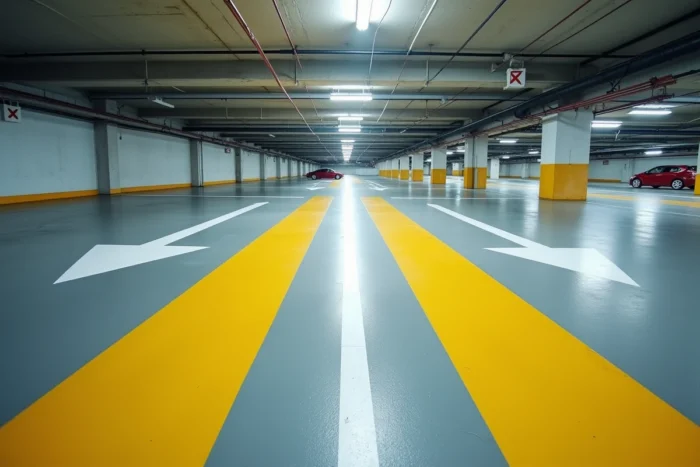
Application conditions and job site errors in parking lot marking
The performance of a floor marking paint depends as much on the application moment as on the choice of product. Two errors consistently recur on parking job sites.
Applying on a substrate with a surface temperature below the dew point causes invisible condensation that prevents film adhesion. Measuring the temperature of the concrete, not that of the ambient air, avoids this classic trap.
Respecting the drying time between coats is crucial for the cohesion of the system. Premature vehicle passage over an uncured film tears the marking off within the first weeks, regardless of the binder used.
In turning and steering areas, mechanical stress is maximized. We observe that doubling the film thickness in these areas significantly prolongs the visibility of the marking compared to a uniform application across the entire parking lot.
The choice between epoxy resin, polyurethane, or methacrylate coating only makes sense when backed by rigorous substrate preparation and controlled application conditions. A mid-range product correctly applied on shot-blasted and primed concrete will always outperform a high-end resin applied on a dirty or damp substrate.