
The insulation of a house refers to all the devices that slow down the transfer of heat between the inside and the outside. Improving the comfort of your home through quality insulation involves acting on three related physical parameters: the thermal resistance of the walls, the inertia of the materials, and the airtightness. These three parameters determine the stability of the indoor temperature, the coolness in summer, and the perceived noise level in each room.
Thermal lag: the forgotten criterion of summer comfort
Most renovation projects focus on the thermal resistance (R-value) of an insulator, meaning its ability to slow down the flow of heat. This criterion is sufficient for winter comfort. For summer comfort, a second parameter is more important: thermal lag.
Thermal lag measures the time it takes for outside heat to pass through an insulated wall. The longer this time, the later the heat peak reaches the inside, when natural ventilation can dissipate the heat. A lightweight insulator like expanded polystyrene offers a good R-value but has a short thermal lag. A dense insulator like wood fiber or cellulose wadding significantly slows down the progression of heat.
Since the implementation of the RE2020 for new constructions, summer comfort has become a regulatory criterion on par with energy performance. The official guides from the Ministry of Ecological Transition now emphasize the need to simultaneously consider insulation and solar protections, even in renovations. Specialized professionals support these comprehensive projects, such as those listed on https://maisonisor.fr/ for the implementation of insulation suitable for existing buildings.
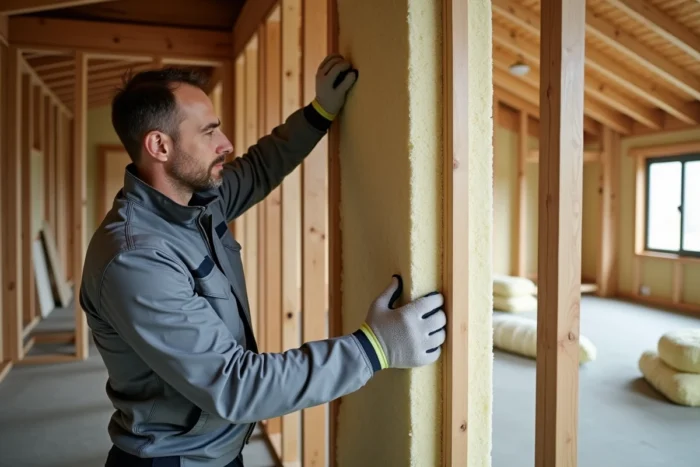
Insulation of attics, walls, and floors: prioritizing the work
Not all walls of a house allow the same amount of heat to escape. The roof is the area where heat loss is highest, followed by the exterior walls, and then the ground floor. This hierarchy guides the order of renovation work.
Attics and roofs first
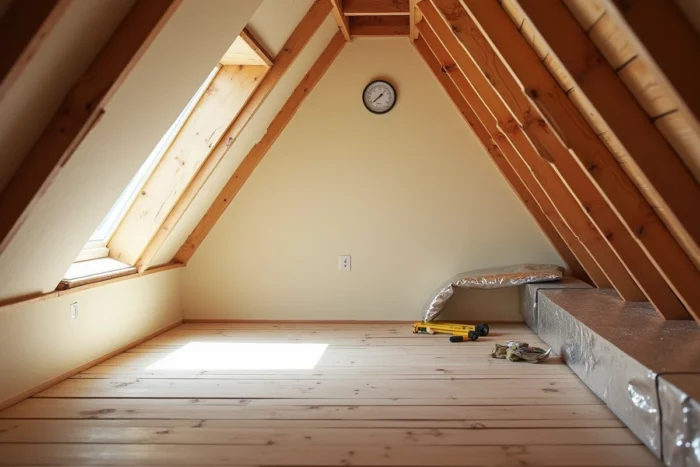
Warm air rises. In a poorly insulated house, the heat produced by heating mainly escapes through the roof. Insulating the attic is the most cost-effective action in thermal renovation. In uninhabited attics, a layer of blown cellulose wadding or mineral wool laid on the floor is enough to transform the comfort felt from the first winter.
Exterior walls: inside or outside
Wall insulation can be done from the inside (double layer of boards with insulation) or from the outside (installation of an insulating coat on the facade). External insulation eliminates most thermal bridges, those junction points between walls where heat escapes unimpeded. It also preserves the inertia of masonry walls, which contributes to summer comfort.
Interior insulation remains relevant when the facade cannot be modified (heritage constraints, party walls). It slightly reduces the living space, but its cost is more accessible.
Floor and ground floor
The ground accounts for a smaller share of heat loss, but a cold floor significantly degrades the perceived comfort. Insulating the ground floor, from below if a crawl space or basement allows it, eliminates this unpleasant sensation without reducing the ceiling height.
Airtightness and ventilation: the inseparable couple
Insulating without addressing airtightness is like putting on a sweater with holes. Unwanted infiltrations (worn window seals, unsealed duct passages, non-airtight wall-floor connections) undermine the performance of the insulation.
Conversely, a house made very airtight without appropriate ventilation accumulates moisture and degrades indoor air quality. Any improvement in insulation must be accompanied by controlled mechanical ventilation (single-flow or double-flow VMC) that renews the air without wasting heat.
- The single-flow VMC extracts stale air from humid rooms (kitchen, bathroom) and allows fresh air to enter through air inlets in dry rooms.
- The double-flow VMC recovers heat from the extracted air to preheat the incoming air, which limits thermal losses related to air renewal.
- The hygroscopic air inlets adjust their flow rate to the ambient humidity level, preventing over-ventilation in winter when indoor air is dry.
Current aid programs (MaPrimeRénov’, CEE, Éco-PTZ) are increasingly oriented towards comprehensive renovation pathways combining insulation, ventilation, and heating. Carrying out these works together rather than one by one opens access to higher aid amounts and ensures technical coherence between the components.
Choice of insulation: thermal resistance, density, and environmental impact
The market offers three families of insulators, each with distinct properties.
- Mineral insulators (glass wool, rock wool) offer a good performance-price ratio and excellent fire resistance. Their moderate density limits their thermal lag in summer.
- Synthetic insulators (expanded polystyrene, polyurethane) achieve high thermal resistances for low thicknesses. They are suitable for constrained spaces, but their production relies on petrochemical derivatives.
- Bio-based insulators (wood fiber, cellulose wadding, cork, straw) combine good thermal resistance and high density, which improves summer comfort. Their carbon footprint is significantly lower during production.
The choice depends on the area to be insulated, the available thickness, the budget, and the desired comfort objective. For a quality insulation aimed at comfort year-round, dense bio-based insulators have a measurable advantage in thermal lag, documented in the 2024-2025 technical guides that present them as a preferred solution for perceived comfort.
Before signing a quote, check that the craftsman offers treatment for thermal bridges at wall-floor and wall-roof junctions. A high-performance insulator installed on a wall with untreated thermal bridges loses a significant part of its effectiveness. The quality of the installation is as important as the choice of material.