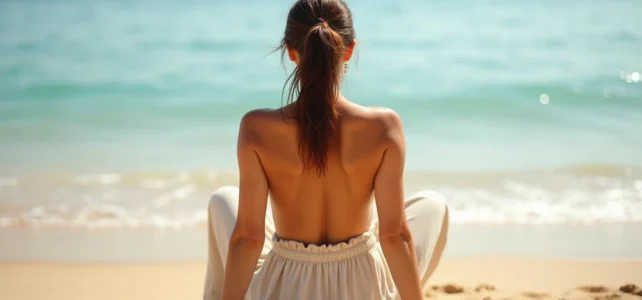
The mammary area has thin, minimally keratinized skin, with a density of melanocytes significantly lower than that of the rest of the torso. Any exposure without proper preparation leads to accelerated actinic damage on the areola and upper décolleté. We start from this dermatological observation to approach topless at the beach from an angle rarely covered by lifestyle guides.
Sun protection for bare breasts: an adapted dermatological protocol
The skin of the breast does not tan like that of the forearm. The areola and nipple lack a protective stratum corneum, making them vulnerable to sunburn from the very first minutes of direct exposure. Applying a mineral sunscreen SPF 50+ over the entire chest, including the areolas, is a non-negotiable prerequisite.
Reapplication should occur every forty minutes in case of sweating or swimming, even with a water-resistant product. We recommend prioritizing formulas without fragrance or alcohol, which irritate the fine skin of the bust less.
- Start with short sessions of ten to fifteen minutes with the breasts exposed, then gradually increase over several days.
- Avoid the most intense sun hours (between noon and four PM), especially during the first sessions.
- Apply an after-sun moisturizing treatment in the evening to compensate for accelerated skin dehydration in this area.
Those looking for tips for topless beach will also find recommendations on choosing swimsuits that facilitate the transition between covered and uncovered, a practical detail often overlooked.
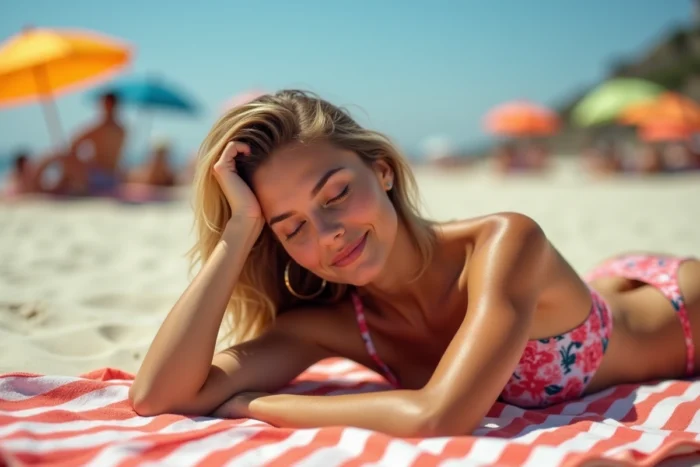
Municipal regulations and topless: what local regulations change concretely
No national law prohibits topless on public beaches in France. The Penal Code punishes sexual exhibition, but case law does not consider bare breasts on a beach as falling under this offense, due to a lack of intent to impose nudity.
The trap lies in municipal regulations. Several coastal municipalities now distinguish what is tolerated on the sand and what is prohibited in the city. Narbonne, for example, fines people going shirtless or in swimsuits in the city center, with fines reaching up to 150 euros. This beach/promenade distinction is becoming widespread and creates a gray area for women who leave the beach topless to go to a parking lot or a beachfront bar.
Before removing the top, we advise checking the regulatory signage at the beach entrance. Some municipalities now include topless in lists of regulated practices (naturism, burkini, shirtless), meaning that targeted restrictions by beach area do indeed exist.
Private beaches and bathing establishments
Private beaches enforce their own internal regulations. An operator can prohibit topless in their establishment without it being considered discrimination, as it is a dress code applicable to all customers. Inquire at the reception before settling in.
Managing gaze and body posture on the beach
Topless confronts a measurable social fact: the majority of French women who practiced it in previous decades have gradually stopped. The presence of smartphones and the possibility of being photographed without consent is the main deterrent identified in recent surveys, much more than personal modesty.
Choosing a strategic location significantly reduces exposure to gazes and cameras. Positioning oneself with the back to the promenade, between already established groups, or in a less frequented cove radically changes the level of comfort felt.
Posture also matters. Starting by lying on the stomach allows one to get used to the sensation without feeling exposed from the front. The transition to lying on the back happens naturally after a few sessions, when the brain has stopped treating the situation as an alert.
Practicing in pairs or groups
The presence of a friend or a group sharing the practice significantly alters the social dynamic. The external gaze dilutes, and the feeling of being “the only one” disappears. We observe that women who start topless accompanied persist much more often than those who try the experience alone.
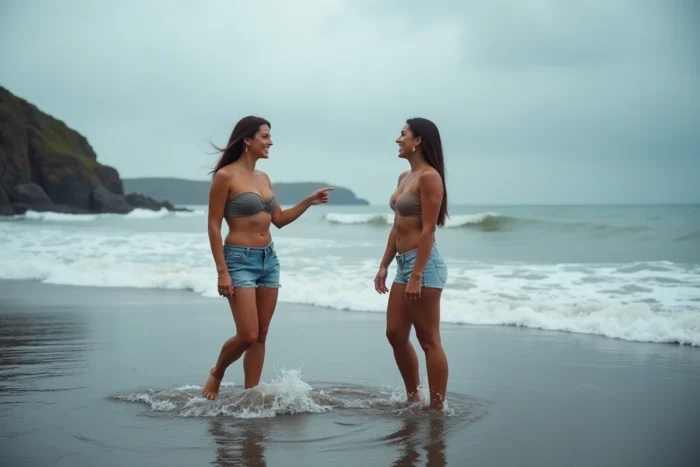
Topless and swimsuits: the technical details that facilitate the practice
A bikini with classic ties (bow in the back and behind the neck) can be removed and put back on in a few seconds. This practicality criterion is often underestimated. A one-piece swimsuit or a bandeau with a complex closure creates logistical friction that discourages spontaneity.
- Prefer a high-waisted bottom or a covering sarong, which visually compensates for the removed top and reinforces the feeling of control over one’s outfit.
- Keep an easy-to-replace bikini top within reach (under the towel, not in the bag) to be able to cover up quickly if necessary.
- Opt for quick-drying fabric: putting on a wet top over dry skin causes discomfort that discourages putting it back on at the right moment.
The choice of swimsuit directly conditions the freedom to switch between covered and uncovered without attracting attention or wasting time. A logistical detail, certainly, but one that often determines whether the experience will be repeated or abandoned.
Topless remains a legal practice on the vast majority of French beaches, provided that local regulations are checked and that a skin area not designed for direct sun exposure is protected. The real obstacle is neither legal nor dermatological: it is the management of the immediate social environment, which is addressed through concrete choices of location, company, and equipment.