
Clara is a feminine name derived from the Latin clarus, which means “clear” or “bright.” Carried by several generations of parents in France, it has long ranked among the most given feminine names. Recent data from INSEE reveals a marked decline: Clara dropped from rank 94 in 2024 to rank 111 in 2025, exiting the top 100 of feminine names in France.
Clara out of the top 100: what the INSEE figures reveal
The volume of births associated with Clara has significantly decreased over the past two years. According to INSEE data reported by the Journal des Femmes and MagicMaman, there were 560 births in 2024 compared to 465 in 2025. This drop of nearly a hundred births in one year indicates a disaffection that goes beyond mere fashion trends.
To understand the meaning and personality of the name Clara, one must also look at the context in which this name evolves. Clara belongs to a category of short feminine names ending in “a,” which have dominated French rankings for nearly two decades. The problem for Clara is that this category is now saturated.
INSEE further specifies that the distribution of a name is only counted from three attributions per gender per year at the national level. This methodological rule means that in some departments, Clara may already be below the threshold of statistical visibility, a signal of geographical decline that national averages obscure.
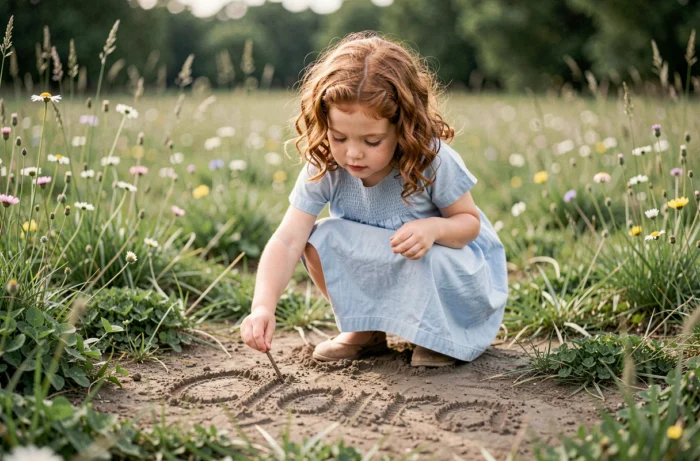
Feminine name ending in “a”: why Clara is losing ground to competition
2026 trend analyses indicate a shift in the name market towards newer short feminine names ending in “a.” Rising names are capturing the attention of parents who might have chosen Clara a few years earlier. The mechanism is classic in name sociology: a name reaches a peak of popularity, then parents seeking originality turn away from it precisely because it has become too common.
Clara peaked in France in the mid-2000s, with a peak exceeding six thousand annual births in certain years. Since then, the curve has been steadily declining. The name is not on the verge of extinction, but it has shifted from the status of “trendy name” to that of “established classic name,” a position less attractive to young parents in search of uniqueness.
A common cycle for feminine Latin names
This pattern is not unique to Clara. Other feminine Latin names have followed the same trajectory in France: a rapid success driven by a soft and international sound, followed by a gradual decline when the next generation of parents associates them with their own classmates. Clara thus joins a dynamic shared by several names in its etymological family.
Latin origin and Clara’s feast: what the name carries as heritage
The name Clara is directly derived from the Latin clarus, an adjective meaning “bright,” “shining,” or “illustrious.” This root has given rise to several variants in European languages: Claire in French, Chiara in Italian, Clare in English. Clara is the form closest to the original Latin, which explains its international character.
The feast of Clara is celebrated on August 11, in reference to Saint Clare of Assisi, founder of the order of the Poor Clares in the 13th century. Born into a noble family in Assisi around 1195, she renounced her privileges to follow the example of Francis of Assisi. Her story has helped anchor the name in the European Christian tradition.
- Chiara is the Italian variant, very popular in Italy and Italian-speaking Switzerland, sharing the same Latin etymology.
- Claire remains the historical French form, continuously used since the Middle Ages, while Clara has emerged more recently.
- Clarissa and Clarinda are elongated forms, less common, that add a suffix to the Latin root without changing its meaning.
Personality associated with the name Clara: between archetype and limits of the exercise
Specialized sites attribute recurring character traits to Clara: initiative, frankness, generosity, and a sense of justice. These descriptions are based on numerology (the number 3 is generally associated with Clara) and astrological correspondences with the sign of Virgo.
These portraits remain cultural constructs, not predictions. No scientific study links a name to personality traits causally. Descriptions of “name character” function as archetypes: they reflect the symbolic associations related to etymology (clarity, light) and the history of famous personalities who have borne this name.
Famous Claras: some notable figures
Among the personalities associated with this name, Clara Schumann (19th-century German pianist and composer) and Clara Zetkin (figure of German feminism) are the most cited historical references. In France, Clara Luciani has helped bring visibility back to the name in recent years through her musical career.

The decline of Clara in the rankings does not diminish what the name carries: a clear etymology, a solid historical grounding, and a sound that crosses linguistic borders effortlessly. For parents considering this name today, the fact that Clara is out of the top 100 could become an asset – fewer Claras in playgrounds also means fewer duplicates, a criterion that many parents prioritize at the top of their list.