
Should you train longer or more often to stay fit on a daily basis? The latest sports news shows a clear shift: short and regular formats are gradually replacing long sessions in the recommendations of health and sports professionals. This article measures the gap between these two approaches and identifies the parameters that truly impact physical condition.
Short sessions or long sessions: a comparison of training formats
The dominant trend in recent sports advice favors slots of 15 to 45 minutes, repeated several times a week, rather than one or two intensive sessions exceeding an hour. This choice is based on a simple observation: consistency produces more sustainable results than occasional intensity.
| Criterion | Short sessions (15-45 min, 4-5x/week) | Long sessions (60-90 min, 2x/week) |
|---|---|---|
| Adherence over several months | High (format compatible with daily life) | Variable (frequent dropouts after a few weeks) |
| Required equipment | None to minimal (bodyweight, brisk walking) | Often linked to a gym or specific equipment |
| Risk of injury upon resuming | Low (gradual increase) | Higher (intense exertion after inactivity) |
| Compatibility with family life | Strong (split slots morning/evening) | Limited (continuous time slot to block) |
| Effect on mental health | Regular (cumulative daily effect) | Peak post-session, then return to baseline |
This table reflects the converging orientations of several recent sources. The most marked gap concerns adherence: a program that fits easily into the schedule lasts longer than an ambitious but rigid plan.
To explore other angles on physical activity and fitness, all articles on the Sport Essex site cover various topics, from weight training to family sports.
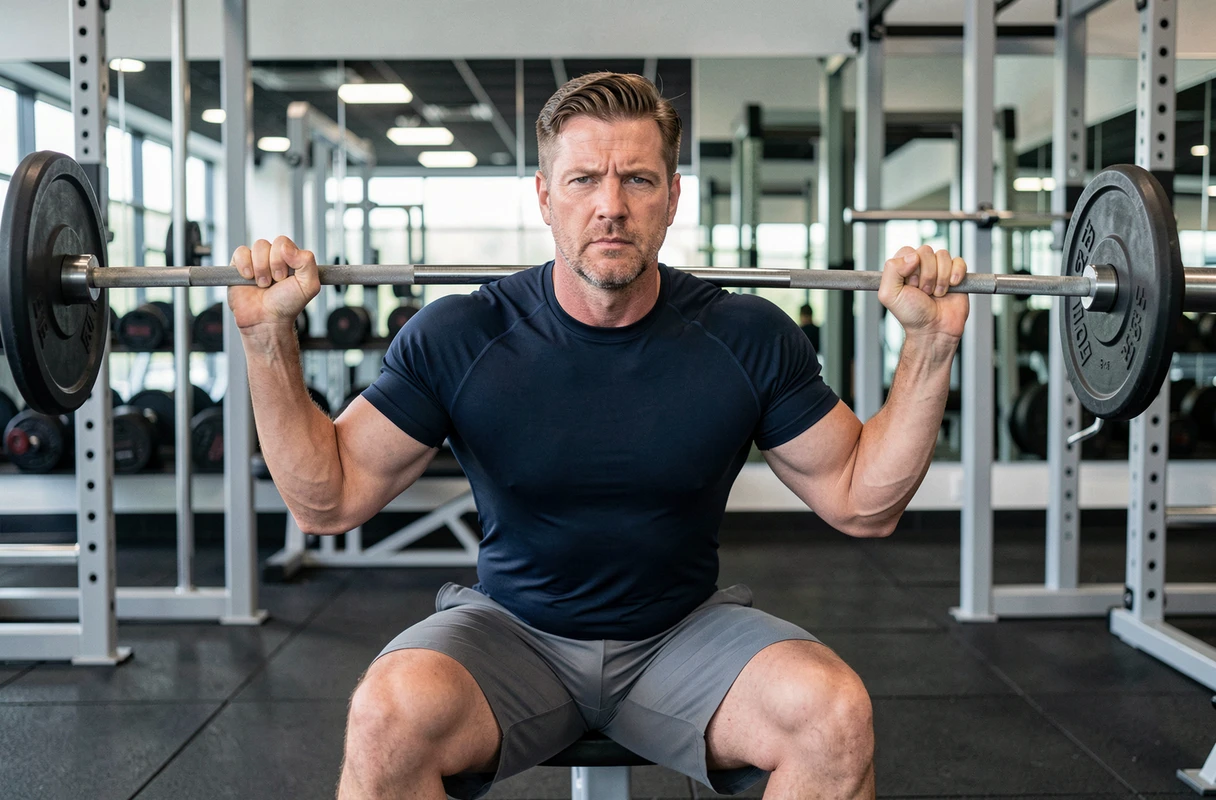
Bodyweight exercises: why this format dominates current sports advice
Functional strength training without equipment is increasingly prominent in recommendations. Several reasons explain this rise in visibility.
The first relates to cost. A gym membership represents a monthly budget, whereas bodyweight exercises cost nothing and can be practiced in any space (living room, garden, park). The second reason is versatility: squats, push-ups, lunges, planks, burpees engage multiple muscle groups simultaneously.
- Squats and lunges work the lower body while engaging core stability, making them useful for daily posture.
- Planks (front plank, side plank) strengthen the abdominal belt and protect the back, a point often overlooked in performance-oriented routines.
- Push-ups and their variations (inclined, declined, diamond) target the upper body without requiring a bench or dumbbells.
- Brisk walking, often underestimated, provides a cardio base accessible to all fitness levels.
This type of program is particularly suitable for beginners. Recent sources emphasize that a gradual return reduces the risk of injury and establishes a more solid habit than a sudden start.
Sport and heat: adjust intensity rather than stop
Managing heat has become a major focus in sports news. Recommendations converge on several concrete points, not just “drink water.”
The time slot matters more than the choice of activity. Training early in the morning or in the evening allows for maintaining regular practice without exposing oneself to temperature peaks. In contrast, training in the middle of the day, even briefly, poses a disproportionate risk of heat stroke compared to the benefit.
Hydration should precede effort. Waiting until you are thirsty means that dehydration has already begun. Specialized sources recommend drinking before, during, and after the session, in small regular amounts.
Intensity should also be adjusted. Reducing the target heart rate by a few beats, lengthening recovery times between sets, shortening overall duration: these adaptations allow for maintaining regularity without compromising safety.
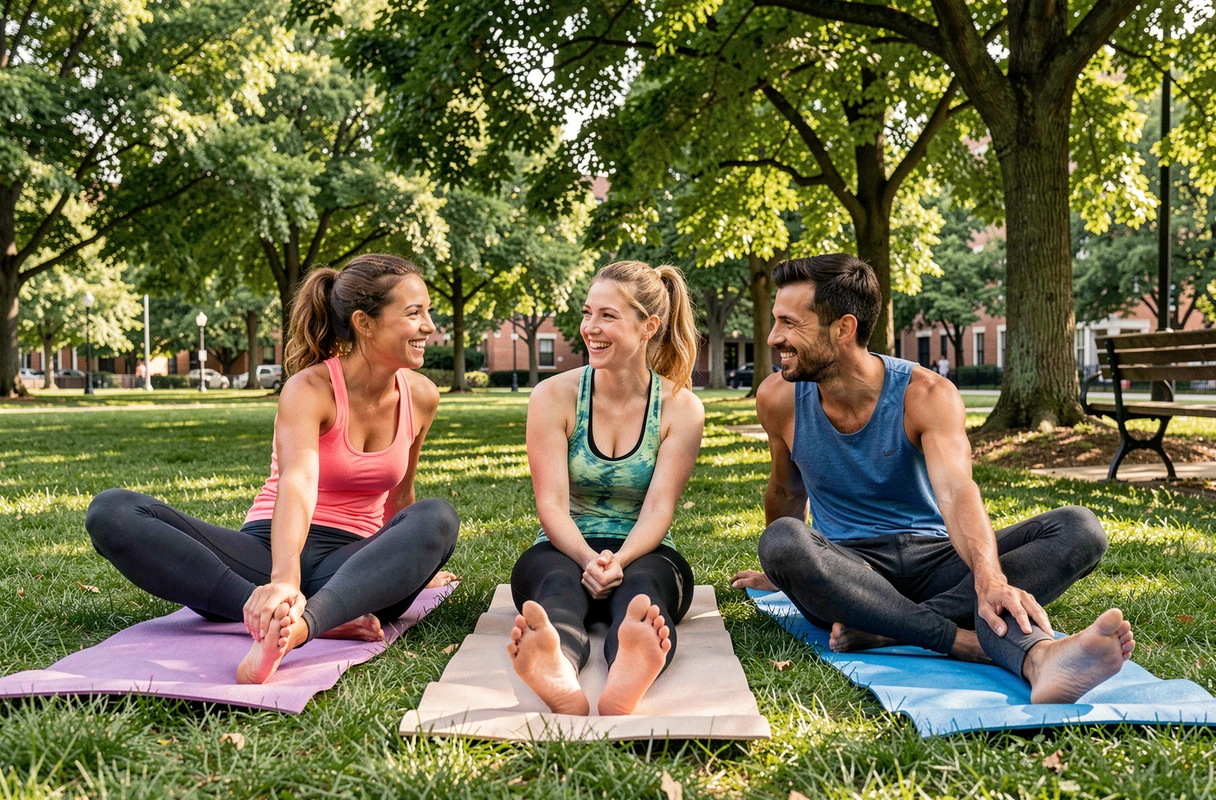
Mental dimension and family life: the parameters that determine regularity
Recent sports content increasingly incorporates mental health as an integral component of fitness. The link between physical activity and brain well-being appears in numerous publications.
Regularity depends less on initial motivation than on compatibility with lifestyle. A parent who has twenty minutes in the morning before the children wake up will gain more benefits from a short and systematic routine than from an “ideal” program they won’t follow.
- Associating sports with a fixed time of day (waking up, lunch break, putting the kids to bed) transforms effort into a habit rather than a daily decision.
- Involving the family in the activity (walking, biking, active games) allows for not opposing sports time and family time.
- Alternating formats (a strength session, a walking outing, a stretching session) avoids boredom and reduces the risk of joint overload.
The “move a little, often” approach works precisely because it removes the pressure of performance. Consistency takes precedence over intensity, and the benefits accumulate over the weeks.
The most underestimated parameter remains the return after a break. Several sources recommend resuming at an intensity lower than before the stop, keeping rest days, and not trying to make up for lost time. A too-rapid return is the leading cause of lasting dropout. Better to have two weeks of gradual re-entry than one intensive week followed by an injury that sends you back to the couch for a month.