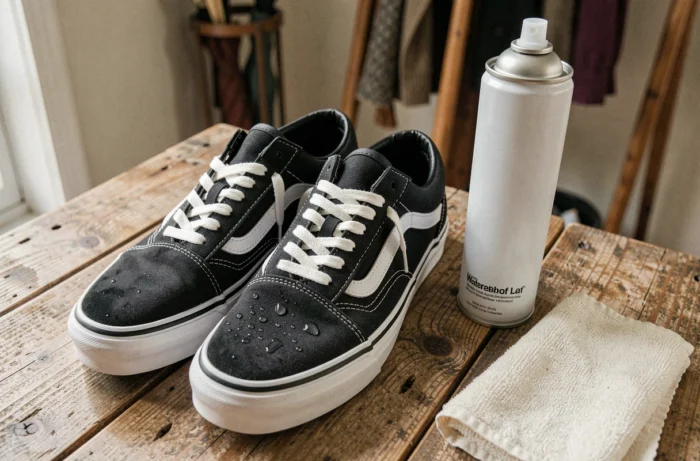
The Vans Old Skool combine cotton canvas, suede, and, on recent models like the Skate Old Skool 36+, mesh and leather inserts. None of these versions come from the factory with a water-repellent treatment or a waterproof membrane. Therefore, the question of water protection arises as soon as the first rain falls, and the available answers vary depending on the area of the shoe in question.
Vulnerable Areas of Vans Old Skool: Canvas, Mesh, and Seams
On a classic model, the canvas absorbs water quickly and takes several hours to dry. Suede, on the other hand, shows marks at the slightest splash. Field reports differ on this point: some users find that the leather of the Premium Old Skool 36 editions resists superficial moisture better, while others report that the mesh area remains the weak point against water, even on versions reinforced by DURACAP technology.
This difference in behavior depending on the materials of the same shoe complicates the choice of a single product. A spray designed for canvas does not penetrate mesh in the same way, and a wax suitable for suede can alter the appearance of the canvas. Before applying anything, identifying the materials present on your pair helps avoid an inappropriate treatment.
The possibility of protecting your Vans Old Skool from water largely depends on this mapping of materials, which varies from model to model within the range.
Waterproofing Sprays Without PFAS: What the New Generation Offers
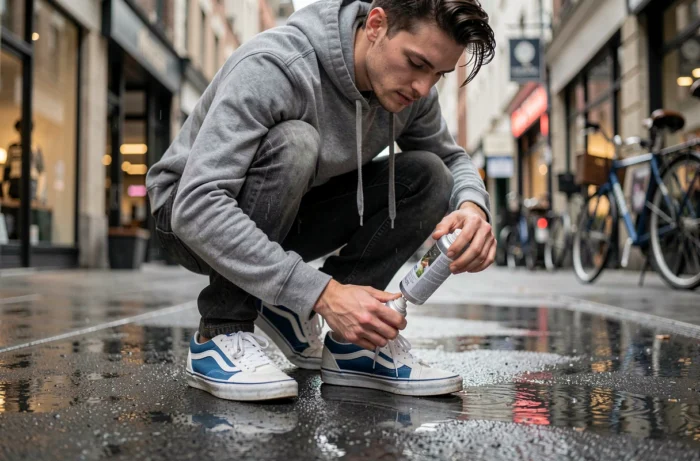
The market for water-repellent sprays for shoes is undergoing a transformation. Fluorocarbon (PFAS)-based formulas, which have long dominated, are giving way to PFAS-free alternatives. Brands like Collonil Carbon Pro, Nikwax, Jason Markk Repel, or Gtechniq Fabric Proof offer solutions based on water or polymers, sometimes biodegradable.
The promise is twofold: comparable waterproofing and reduced environmental impact. However, the available data does not allow for a conclusion about identical durability between the two families of products. Tests conducted on canvas and suede show that most PFAS-free sprays require regular reapplication to maintain their effectiveness.
On a pair of Vans Old Skool worn daily, the frequency of treatment renewal is as crucial a selection criterion as the initial performance of the product.
Criteria for Choosing a Spray Suitable for Vans Old Skool
- Multi-material compatibility: the spray must work on canvas, suede, and, if applicable, leather or mesh without altering colors or leaving visible residue
- PFAS-free formula: water-based or nano-polymer sprays reduce exposure to persistent substances while providing adequate water repellency on textiles
- Reasonable drying time: some formulas require several hours of complete drying before any exposure to moisture, necessitating planning the application the day before
Reapplication Routine: Protection Lasts Only a Few Weeks
One point that most guides underestimate: no spray protects Vans Old Skool permanently. Recent field tests on canvas and suede indicate that a renewal every four to six weeks is necessary to maintain a functional level of water repellency.
This frequency depends on the intensity of use. A pair worn every day in a humid urban environment will lose its protection faster than a pair reserved for weekends. Mechanical friction (prolonged walking, contact with a backpack at the heel) accelerates the degradation of the protective layer.
Concrete Steps Before Each Reapplication
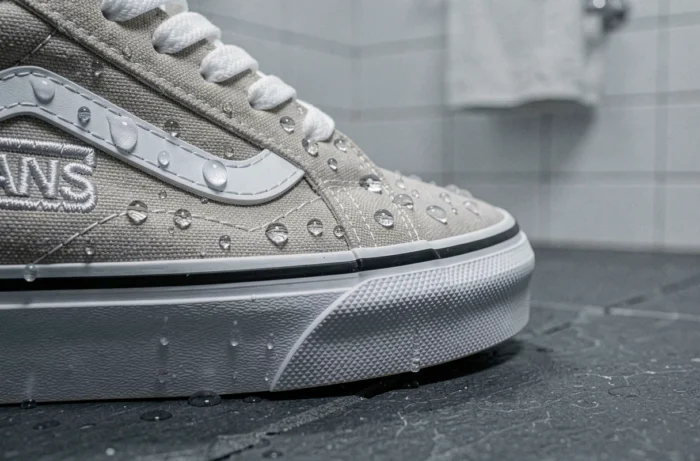
- Remove the laces and brush the canvas dry to eliminate dust and mud residues; otherwise, the spray seals dirt under the protective layer
- Clean stained areas with mild soap and a soft brush, then let the pair dry completely (forcing drying with a hairdryer distorts the canvas)
- Apply the spray in thin, even layers, focusing on the seams and the canvas-sole junction, where water infiltrates first
- Let dry in the open air for the time indicated by the manufacturer before wearing the pair again
Following this routine does not turn a Vans Old Skool into a waterproof shoe. The goal is to slow down water penetration, not to prevent it entirely. In light rain, a recent treatment is sufficient to keep feet dry. Under prolonged downpours, water will eventually penetrate the canvas.
Wax or Spray for the Suede of Vans Old Skool: Two Different Logics
The suede present on the side panels of the Old Skool poses a specific dilemma. Nano-polymer sprays form an invisible film that preserves the velvety appearance of the suede. Water-repellent waxes, on the other hand, penetrate the fiber and alter the texture: the suede becomes smoother, darker, and loses some of its original feel.
For daily urban use, a PFAS-free spray better preserves the aesthetic of the suede than a wax, at the cost of less durable protection. For more exposed use (festivals, urban hikes in the rain), wax offers a more resistant barrier, but the visual compromise is real.
The choice between the two depends on the priority given to appearance or performance. Both approaches remain complementary: some users apply wax on the suede and a spray on the canvas, which takes more time but respects the specifics of each material.
Protecting a pair of Vans Old Skool from moisture requires regular maintenance, not a one-time operation. The shift to PFAS-free formulas simplifies the ethical choice but imposes a reapplication discipline that most wearers abandon after a few weeks. The best protection, in practice, combines a spray suitable for the materials of your specific model and a renewal schedule that you will actually adhere to.